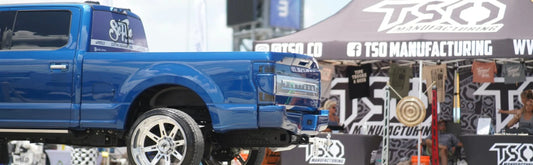

Months can go into building a truck that looks exactly how it should, with the lift height dialed in, the tire size stepped up, and the stance tightened until everything feels intentional. Then one hard pull under throttle changes the conversation as the rear end starts to hop under load. In that moment, the truck exposes something that no visual upgrade can hide. The added power is asking more from the suspension than it was built to control.
As power moves through the driveline, the rear axle doesn’t just spin the tires forward, it tries to twist upward against the leaf springs with significant force. Those springs flex under that pressure, storing energy and releasing it in a cycle that repeats rapidly once it begins. That repeated flex and snap is axle wrap, and when it builds momentum, it turns into wheel hop during acceleration or instability while towing heavy weight. The more force you introduce through lift and tire size, the more aggressive that cycle becomes.
This is where traction bars move from optional hardware to functional control. By limiting how far the axle can travel under rotation, they stabilize the rear suspension and prevent uncontrolled movement from compounding under stress. What matters is confidence, durability, and a rear end that stays composed when weight and power are applied together.
What Traction Bars Actually Do.
Axle wrap happens because a leaf-sprung rear suspension was never designed to fully resist twisting force on its own. Under acceleration, the axle housing tries to climb the leaf springs as torque travels through the driveshaft. The springs absorb that energy while also serving as both a locating device and suspension component. That dual role is where control begins to break down under higher loads.
Without restraint, the axle shifts forward and backward in a rapid cycle as the springs flex and rebound. Each repetition unloads and reloads the tires against the pavement, creating the hopping sensation drivers feel under throttle. The suspension geometry changes momentarily with each cycle, affecting pinion angle and overall stability. Over time, that stress accelerates wear across the rear assembly.
Traction bars are engineered to interrupt that cycle by physically limiting how far the axle can rotate under torque. Instead of letting the springs absorb and release all that movement, the bars redirect and stabilize it through a controlled structure. Properly designed systems maintain suspension travel while limiting excessive wrap. The result is smoother power delivery, more consistent traction, and a rear end that behaves predictably instead of reacting violently.
When built correctly, traction bars integrate with the suspension rather than fight against it. Geometry, mounting points, and material strength matter because the goal is control without introducing new stress. Quality and engineering standards become critical, especially for trucks that see real-world use beyond light commuting. A properly matched setup supports the suspension instead of masking a deeper problem.

The Problems Traction Bars Are Designed to Fix.
Wheel hop is usually the first and most obvious sign that axle wrap has gotten out of control. Instead of applying power smoothly to the ground, the rear tires grab, release, and grab again in rapid succession. That repeated loss of traction does more than feel violent through the seat. It places shock loads on suspension components that were never meant to absorb that kind of repeated impact.
Leaf springs also take the hit over time. When they are forced to flex beyond their intended range under heavy torque, fatigue builds quickly. Springs can flatten, bushings wear prematurely, and rear ride height can begin to change gradually. Left alone, that stress can snowball into cracked mounts and, in hard-use cases, even broken leaf springs.
Driveline stress is less visible but just as serious. As the axle rotates excessively under load, pinion angle shifts momentarily and U-joints experience inconsistent alignment. That inconsistency increases wear and can lead to vibration or premature failure. Keeping axle movement controlled protects the driveline from taking unnecessary abuse.
Towing amplifies these issues even further. Additional weight increases load on the rear axle and exaggerates rotational force under acceleration. Without proper control, the truck can feel unsettled when pulling heavy trailers, especially during throttle input or grade changes. Traction bars help keep that movement controlled so the truck remains stable instead of reacting unpredictably.
Who Needs Traction Bars and When They Make Sense?
Not every truck requires traction bars, and pretending otherwise only weakens the argument. A stock-height daily driver running moderate tire size and factory power levels may never experience noticeable axle wrap. If the suspension is not being pushed beyond its intended limits, the rear end will generally remain stable under normal driving conditions. In that case, traction bars may add presence but will not transform how it behaves.
The equation changes once leverage and load increase. Lifted trucks introduce additional mechanical advantage against the rear axle, especially when paired with larger tires. As tire diameter grows, so does the stress placed on the leaf springs every time power is applied. If wheel hop becomes noticeable under throttle, that is a clear sign the suspension is no longer managing that force effectively.
Heavy towing introduces another threshold. Sustained load cycles magnify stress on the springs and mounting points, even if the truck feels manageable unloaded. Over time, that added demand can accelerate fatigue and create instability during acceleration or grade changes. When a truck feels unsettled while pulling weight, traction bars move from optional to practical.
Higher torque setups and aggressive launches also push stock leaf springs beyond their comfort zone. Diesel builds, tuned applications, or trucks driven hard off the line generate force that factory geometry was not designed to control repeatedly. When lift, tire size, towing demand, and torque output combine, the need becomes far more obvious. At that point, traction bars are not about appearance, they are about maintaining control and protecting the rest of the system.
Not sure where your truck falls?
The fastest way to find out is to check what actually fits your setup. Enter your year, make, and model and see verified fitment for your truck.

What Separates Quality Traction Bars From Cheap Options.
Not all traction bars are built with the same intent. On the surface, most designs look similar, but the difference appears once real torque and real load enter the equation. Material thickness, weld consistency, and mounting geometry determine whether a bar simply bolts on or actually controls axle movement under stress. Structural integrity matters more than appearance when the suspension is working hard.
Tubing strength and bracket design play a major role in long-term durability. Thinner materials may reduce cost, but they can introduce flex where control is supposed to exist. Consistent weld penetration and reinforced mounting points help prevent fatigue cracks over time. When traction bars are expected to handle real-world use, those details stop being optional.
Fitment precision also separates manufacturers from generic suppliers. A verified fitment guide based on your vehicle’s year, make, and model helps ensure mounting points align correctly and suspension geometry stays intact. Poor alignment can introduce new stresses instead of eliminating existing ones. Buying directly from a manufacturer that controls production standards reduces that risk significantly.
This is where companies like TSO Manufacturing distinguish themselves. Producing traction bars in-house in Tennessee allows tighter oversight on materials, welding standards, and quality control. American manufacturing isn't a marketing phrase; it reflects accountability and consistency. Builders know exactly where the product comes from and who stands behind it.
Customization adds another layer without compromising strength. Offering multiple finish options and personalized text allows builders to match their suspension components to the overall look of the truck. When customization is paired with structural integrity, form and function no longer compete.
Complete mounting hardware and free shipping also simplify the process. Receiving a properly matched system with verified fitment removes guesswork from installation. In the end, quality traction bars should feel like a structural upgrade, not an accessory.
The Bottom Line.
Traction bars are not a universal requirement. Their purpose is straightforward: controlling how torque moves through a leaf-sprung rear suspension so that power does not overwhelm geometry. When axle wrap shows up consistently, it rarely stays minor for long. Left unaddressed, it compounds stress across springs, bushings, and driveline components.
For trucks running higher torque, larger tires, added lift, or regular towing loads, traction bars become part of building responsibly. The goal is not simply to add hardware, but to make sure suspension control matches the capability of the rest of the build. Stability under load protects both performance and longevity. That balance is what separates a truck that only looks built from one that actually performs the way it should.
Choosing quality components makes that difference clearer. Proper materials, precise fitment, and accountable manufacturing standards all contribute to long-term reliability. Builders who invest time and money into doing a truck correctly tend to approach suspension the same way. When torque is managed and geometry stays consistent, confidence follows every time the truck is put to work.
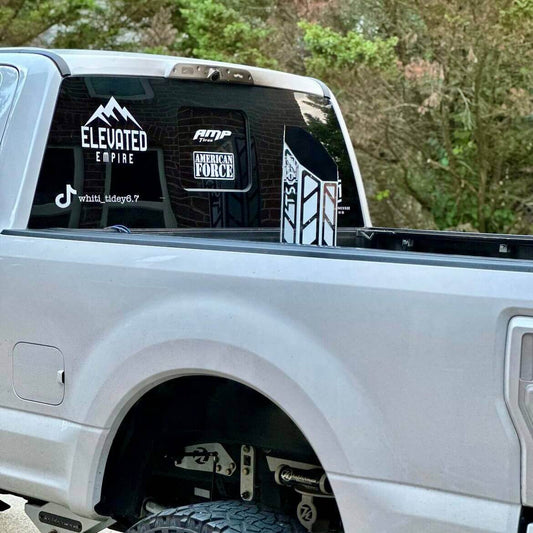
There is one more thing worth considering. Unlike most suspension work, traction bars are visible. They mount below the bed where everyone sees them, which means you are bolting a structural component onto the outside of a truck you spent months getting right. Most companies hand you flat black and call it finished. On a build where lift height, tire size, and stance were all deliberate decisions, accepting a part that clashes with the rest of it does not make much sense.

TSO Traction Bars are available in over 5,500 powder coat colors, can be color matched to your truck, and can carry personalized text. The steel, the welds, and the fitment stay the same either way. You simply do not have to choose between a rear end that performs and one that looks the way you intended. That is what turns a good-looking build into a truck that performs as confidently as it stands.
Build your set
Verified fitment for your year, make, and model. Over 5,500 powder coat colors, color matching, and personalized text. Complete mounting hardware and free shipping, built in-house in Tennessee.